

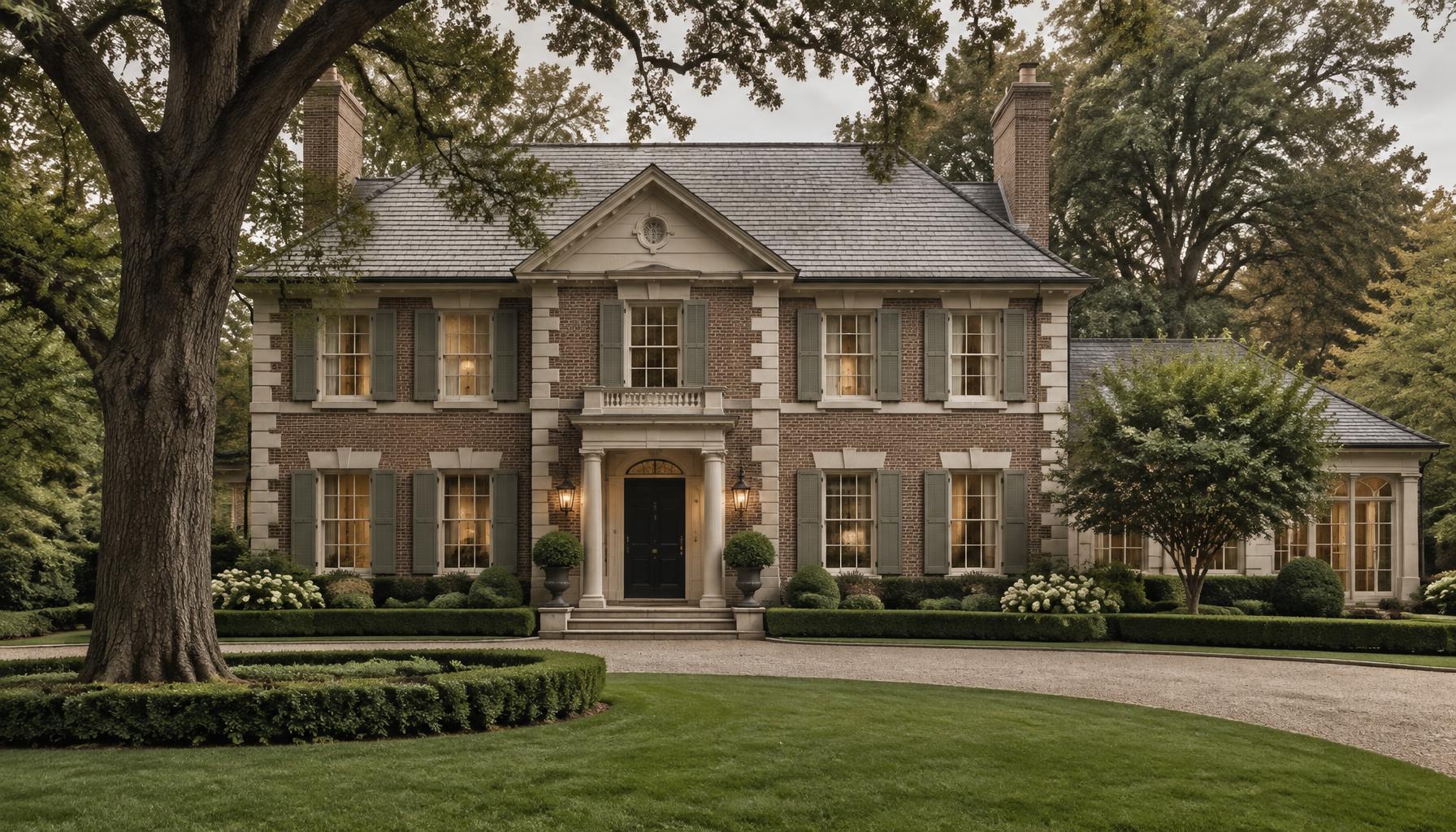
Most buyers begin, quite naturally, with the present. Are there enough bedrooms? Does the kitchen feel right? Does the location work? Can I picture my week unfolding here?
Those questions matter, and they should come first. But a significant real estate decision usually deserves a second layer of thought: how might this property serve me several years from now?
That doesn't require knowing what the market, interest rates, the neighborhood, or your own life will look like in a decade. No one can. It simply means looking at a property in two timeframes — what it offers you now, and how it may function for you over time — and making today's decision with a clearer view of tomorrow's possibilities.
01
Separate "I Love It" From "Does It Work?"
Emotional connection is a normal and healthy part of choosing a home. A beautiful kitchen, a dramatic entry, a pool, a view, a striking architectural detail — these create real appeal. The work is to pair that emotional fit with a practical one. A few questions help:
- Does the floor plan suit the way I actually live, not the way I imagine living?
- Are there spaces I'd be paying for but rarely use?
- Is the level of upkeep one I'm comfortable managing?
- Are there features I love visually that may be demanding or costly to maintain?
- Would I still value these qualities once the excitement of buying has settled?
02
Think in Chapters
Rather than asking whether a home will be the last one you ever own, it's more useful to think in chapters. Careers shift. Relocations happen. Remote-work arrangements change, businesses begin, caregiving responsibilities arise, mobility needs evolve, and priorities around time, money, and maintenance move with them.
You don't need to predict every turn. The better question is whether this property gives you reasonable flexibility for the chapters you can already anticipate.
03
Evaluate Location as a Pattern
The value of a location to you rarely comes from a city name or ZIP code. It comes from what the location lets you do repeatedly: reach work, the airport, healthcare, shopping, dining, recreation, cultural venues, the people you see often, and the corridors you travel most.
In Metro Atlanta, practical accessibility can matter considerably, and travel times vary with traffic and time of day. Rather than relying on an estimate, drive the routes that matter most to you at the hours you'd actually travel them.
04
Look at the Land, Not Just the House
Long-term evaluation includes the site itself: lot size, topography, drainage, orientation, sunlight, privacy, trees, outdoor space, the driveway and access, neighboring uses, boundaries, easements, and recorded restrictions — along with whether expansion is legally feasible, if that matters to you. No single lot characteristic is universally better. What matters is that you understand the land you're buying, because many of its qualities can't be changed later.
05
Distinguish the Cosmetic From the Fundamental
More readily changed
Paint, light fixtures, hardware, some flooring, décor, some appliances, landscaping details.
More difficult to change
Location, lot, overall square footage, structural configuration, orientation, community, certain architecture, HOA or condominium structure, surrounding land uses.
Buyers sometimes pass on a fundamentally strong property because of a dated finish that could be replaced in a weekend. The reverse happens too: handsome finishes can draw attention away from a more consequential concern. Keeping the two categories distinct leads to clearer decisions.
06
Give the Floor Plan a Second Look
There is no universal ideal layout — only one that fits your priorities. It's worth considering whether the main living spaces are well proportioned, whether storage is adequate, whether bedrooms and baths are placed in a way that works for you, whether there's a genuine place to work, and whether rooms could reasonably take on different roles over time. If entertaining matters, does the plan support it? Could accessibility become relevant? Does the home move easily between indoors and out?
07
Ownership Cost Doesn't End With the Mortgage
The purchase price and the monthly payment are only part of the picture. Ongoing ownership may include property taxes, homeowners insurance, HOA or condominium assessments, utilities, landscaping, pool care, pest control, routine repairs, system servicing, exterior upkeep, specialty systems, and eventual major replacements.
Larger or more complex properties often bring more operational responsibility. That isn't a reason to avoid them — many owners find those properties deeply rewarding. It's a reason to understand the commitment before making it. Our mortgage calculator can help you explore payment scenarios as one piece of that larger view.
08
Consider the Property's Capital Needs
Major components don't last indefinitely. Roofs, HVAC systems, water heaters, windows, exterior finishes, appliances, pool equipment, septic systems, generators, elevators, and specialty systems all have a working life. Ask what is known about their age and condition, what maintenance has been performed, and what may need replacement during the years you expect to own the home. Lifespans vary widely, so qualified inspectors and service providers are the right sources for specifics.
Long-term evaluation begins with understanding what you're purchasing today. Our guide to Due Diligence Beyond the Inspection Report explores the questions that may deserve attention before closing. The companion Buyer Due Diligence Questions Guide offers a printable way to organize them.
09
Understand the Community's Structure
For HOA and condominium properties, the ownership experience is shaped by more than the amenities. It's worth reviewing assessments, reserves, any special assessments, rules and architectural restrictions, which maintenance responsibilities belong to you, leasing and use restrictions, parking, and planned projects. An association isn't inherently good or bad; the point is to understand the obligations that come with the property.
10
Consider What You Can't Easily Control
Owners can change a great deal inside a home. They have far less influence over nearby land uses, surrounding development, transportation infrastructure, municipal planning, community rules, and neighboring commercial activity. Where these matter, the most reliable answers come from city and county planning offices, state agencies, and association documents — not from speculation.
11
Marketability Is Not a Prediction of Appreciation
These two ideas are often treated as one, and they shouldn't be. Appreciation is a change in value over time. It depends on future market conditions and cannot be known or guaranteed. Marketability is broader: how a property's characteristics may be received by buyers in whatever market exists when you eventually sell.
You can't know what a home will be worth years from now. You can, however, observe the qualities that tend to shape future buyer interest — property type, function, condition, location, accessibility, lot, architecture, maintenance demands, community structure, price position, and the alternatives buyers will have. None of these guarantees a result. They are simply the observable side of a question whose other side remains unknown.
Observable property characteristics can be studied. Future market performance cannot be promised.
12
Don't Buy for an Unknown Future Buyer
There's a balance to keep. Becoming so focused on resale that you buy a home you don't enjoy, or one that doesn't meet your needs, defeats the purpose. A property must first make sense for the person buying it. The long-term lens weighs today's life, future flexibility, the reality of ownership, and potential marketability together — and livability shouldn't be traded away for speculation.
13
If Renting Later Is Part of Your Thinking
Some buyers wonder whether a property could be rented in the future. Before relying on that possibility, look into HOA and condominium restrictions, local ordinances, rental caps, minimum lease terms, licensing where applicable, insurance and lender requirements, and the practical demands of management and maintenance, along with tax considerations to review with a qualified professional. A property can't be assumed to be rentable — legally or practically — until those questions are answered.
14
For Investment-Minded Buyers, Separate Use From Return
When residential property is being evaluated partly or primarily as an investment, the analysis widens: acquisition cost, financing, operating expenses, maintenance, vacancy, management, capital expenditures, rental restrictions, potential income, alternative uses, and an exit plan. Projections are only as sound as the assumptions behind them, so those assumptions should be verified rather than hopeful. Tax and financial questions belong with qualified advisors.
15
Ask the Exit Question Before the Purchase
An exit strategy doesn't mean planning to sell quickly. It means asking, in advance: if my circumstances changed, what reasonable options would this property give me? Depending on the home, those might include continuing to live there, selling, keeping it as a second home, renting where legally and practically permitted, or renovating and reconfiguring where feasible. That flexibility can be valuable even if you never use it — though not every property needs to serve every purpose.
16
A Now / Later Property Check
For a simpler comparison when you're weighing more than one home, it can help to look at each through two short lists. This isn't a scoring system — it's a way to make sure both timeframes get a fair hearing.
Now
Does this property work for my life today?
- Location
- Layout
- Space
- Lifestyle
- Monthly ownership
- Condition
Later
What should I understand about owning it over time?
- Maintenance
- Major systems
- Future capital needs
- Flexibility
- Community obligations
- Marketability considerations
- Possible exit options
—
Across Metro Atlanta
The region offers very different ownership experiences: urban condominiums, townhomes, established suburban homes, golf-community and gated residences, estates, acreage, and new construction. A Midtown condominium raises different questions than a large suburban estate. A golf-community home carries different considerations than an unincorporated property with land. New construction may involve different maintenance and surrounding-development questions than an established residence. These are differences in how to evaluate — not a ranking of one over another. Our community guides and A Thoughtful Framework for Choosing a Metro Atlanta Community offer a place to start, alongside official county and school-system sources.
—
Closing Thoughts
A sound residential decision doesn't depend on knowing what the next five, ten, or fifteen years will bring. It depends on understanding the property well enough to consider how it may serve you as a home, as an ongoing financial responsibility, as a physical asset, and as a future option. That's the perspective we bring to every buyer consultation.
No one can see the years ahead clearly. The aim is to choose with enough perspective that this decision still holds up when they arrive.
Every great legacy was once just a great decision.
This article is provided for general educational purposes only and is not legal, financial, tax, investment, lending, appraisal, engineering, or other professional advice. Real estate values, ownership costs, market conditions, and individual circumstances can change. Buyers and property owners should consult appropriately qualified professionals regarding their individual circumstances.